


What to Know Before Starting a Bathroom Remodel
- Cindy Gann

- May 7
- 9 min read
Bathroom remodels sound simple enough… until you realize you’re making approximately 4,372 decisions over the course of two to six weeks while brushing your teeth in the kitchen sink and wondering why you ever started the project in the first place.
What begins as “we just want to update the bathroom” quickly turns into decisions about tile, grout colors, vanity sizes, plumbing fixtures, lighting, mirrors, paint colors, storage, hardware finishes, shower glass, and whether moving one plumbing wall is really worth the added cost.
As someone who works in both design and remodeling, I’ve learned that the bathrooms people love most years later are rarely the ones designed solely around the latest trend. They’re the bathrooms that balance beauty with function, feel timeless instead of temporary, and are thoughtfully planned around the homeowner’s actual lifestyle, maintenance preferences, and budget.
A beautiful bathroom is about far more than choosing pretty tile. It’s about understanding how all the moving pieces work together — from undertones and lighting to layout, storage, durability, and long-term maintenance.
Whether you’re planning a full gut renovation or simply refreshing an outdated space, here are a few things I believe every homeowner should know before starting a bathroom remodel.

1. Start With a Realistic Budget
Before selecting tile patterns, dreamy lighting, or the perfect shade of paint, it’s important to have an honest conversation about budget. Bathroom remodels can vary wildly in cost depending on the size of the space, the materials selected, and especially whether plumbing, electrical, or layout changes are involved.
Layout changes can also impact remodeling costs significantly, especially when plumbing or electrical work is involved, so it’s important to factor those decisions into the budget early.
It’s also wise to build a little cushion into your budget for the unexpected. Once demolition begins, surprises behind walls are not uncommon — especially in older homes. Water damage, outdated wiring, plumbing issues, or hidden structural concerns can all appear once everything is opened up.
And while Pinterest and Instagram are wonderful sources of inspiration, they can also make it easy to fall in love with selections that may not align with your actual investment range. I always encourage homeowners to prioritize the elements that matter most to them and look for opportunities to balance beauty, function, and cost throughout the space.
For example, custom cabinetry is beautiful, but there are also many well-made freestanding vanities and quality box cabinet options available today that can save a significant amount of money. The same goes for countertops — many stone fabricators have remnants left from larger projects that work perfectly for bathroom vanities at a fraction of the price.

2. If Possible, Keep the Existing Layout
One of the quickest ways to increase the cost of a bathroom remodel is by moving plumbing fixtures. Relocating a toilet, shifting a shower, or moving a vanity may not seem like a major change at first, but once plumbing lines, electrical work, flooring repairs, tile adjustments, and labor are factored in, costs can rise quickly.
That doesn’t mean layout changes are never worth it. Sometimes improving functionality absolutely justifies the investment — especially in bathrooms with awkward layouts, poor storage, or cramped showers. But if your current layout functions reasonably well, keeping plumbing locations in place can free up more of your budget for the things you’ll actually see and enjoy every day, like better lighting, quality tile, upgraded countertops, or additional storage.
I always encourage homeowners to focus first on how the bathroom needs to function for their everyday life. Is there enough counter space? Adequate storage? Better lighting for getting ready? A more usable shower? Sometimes the smartest remodel decisions are not the most dramatic ones, but the ones that make the space work better long-term without unnecessarily driving up the budget.
And while we all love a good inspiration photo online, it’s important to remember that not every beautiful bathroom is practical for every home, family, or budget. The goal is not simply to recreate a trend — it’s to create a space that feels beautiful, functional, and realistic for the way you actually live.

Keeping the existing layout and plumbing locations helped dramatically transform this bathroom while avoiding the added expense of major structural changes.
3. Tile & Grout Choices Matter More Than Most People Realize
Tile is often one of the biggest visual focal points in a bathroom, which is why I always encourage homeowners to think long-term when making selections. While trendy patterns and bold colors may feel exciting in the moment, simpler and more timeless choices tend to age much more gracefully over time.
One of the biggest tile debates in bathroom design usually centers around tile size. Smaller mosaic floor tiles are loved for their classic feel and added slip resistance since the extra grout lines create more traction underfoot. They can be beautiful and timeless, but they also tend to come with higher labor costs and significantly more grout maintenance.

Larger format tiles have become popular for good reason. They cover more surface area, typically require less labor to install, create fewer grout lines to clean, and can often be more budget-friendly overall. If working within a tighter budget, I often recommend larger tiles in softer, timeless tones without overly busy patterns or trendy colors.
One place where smaller tile is typically recommended, however, is the shower floor. Because shower pans are sloped toward the drain for proper water drainage, smaller tile formats are able to contour to those angles much more naturally than large format tile. Mosaic tile — including smaller 1x1, 2x2, hex, penny, or even some 3x3 formats — is commonly used because it functions better with the slope while also creating additional slip resistance from the extra grout lines.
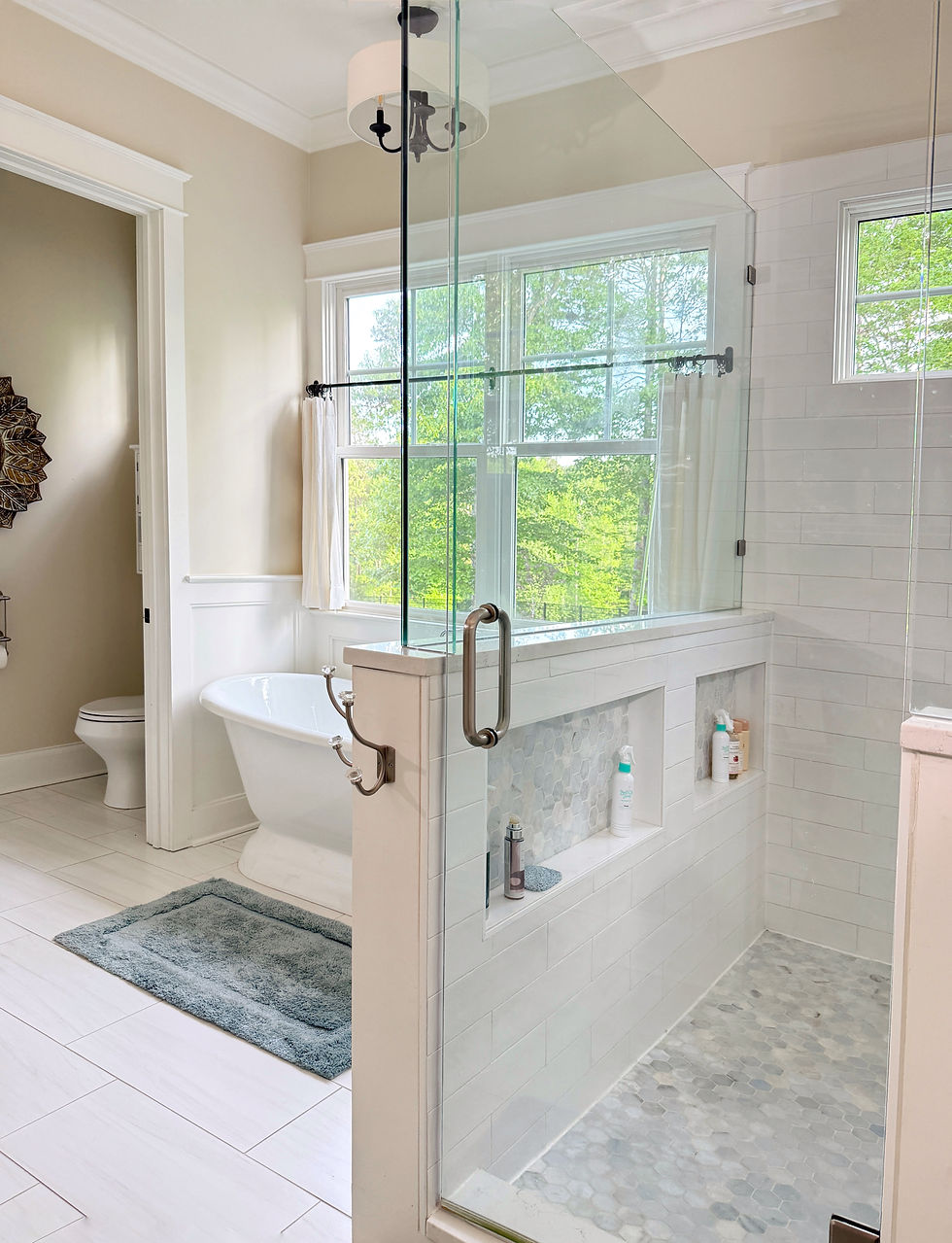
Larger tiles can sometimes be used successfully, especially with certain layouts or linear drains, but they often require more cuts, more labor, and a very skilled installer to ensure proper drainage and avoid uneven edges. Even in bathrooms where larger tile is used throughout the main floor, a smaller coordinating shower floor tile is often the most practical and timeless solution.
And speaking of grout — grout color matters far more than most people realize. Bright white grout can quickly begin showing dirt and discoloration, especially on bathroom floors. On the other hand, very dark grout can create a higher-contrast, more modern look that sometimes feels visually busy over large surfaces. I typically prefer softer putty or warm gray grout colors that feel more timeless and forgiving in everyday life. One of my personal go-to grout colors for many bathrooms is MAPEI Frost because it tends to work beautifully with a wide range of neutral tile selections.

It’s also important to remember that complicated tile layouts like herringbone or basketweave usually increase labor costs significantly compared to a more standard brick or stacked pattern. Sometimes the most timeless bathrooms are the ones that keep things simple, layered, and cohesive.
4. Lighting and Fixtures Matter More Than Most People Realize
Lighting fixtures are one of the easiest ways to add personality, warmth, and style to a bathroom, but they need to be selected with the whole space in mind. Sconces, vanity lights, mirrors, faucets, cabinet hardware, and shower fixtures all sit fairly close together in a bathroom, so the finishes need to feel intentional. I typically recommend keeping plumbing fixtures consistent throughout the bathroom — meaning the sink faucets, shower hardware, and tub fixtures usually coordinate in the same finish so the space feels cohesive rather than pieced together.
Another mistake I see is homeowners assuming all brushed gold finishes are the same when, in reality, some lean warm and brass-like while others feel softer or more champagne-toned. When fixtures are positioned directly beside one another, slightly mismatched golds can often feel accidental rather than layered. In those situations, it’s usually better to either make sure the finishes closely coordinate or intentionally contrast them with a finish like satin nickel or chrome. Mixing metals can absolutely work beautifully, but I typically recommend limiting the space to no more than two or three thoughtfully coordinated finishes so the bathroom feels cohesive instead of visually disconnected.

Placement matters just as much as the fixture itself. While vanity bars above mirrors are common, sconces placed beside mirrors often create softer, more even facial lighting with less shadow casting, which can be especially helpful for makeup application or shaving. Recessed lighting alone is rarely enough, so layering lighting throughout the space helps the bathroom feel both functional and warm.
Bulb temperature is another detail that can completely change the feel of the room. Extremely warm bulbs can cast a yellow or orange glow, while cooler bright white bulbs can make a bathroom feel stark and clinical. For most bathrooms, I typically find that 3000K lighting creates the best balance — warm enough to feel inviting while still bright and clean enough for everyday task lighting.

5. Think Through Storage Early
Bathrooms hold far more than most people realize between towels, toiletries, makeup, skincare, hair tools, cleaning supplies, and extra toilet paper. Thinking through storage early in the remodel process helps the bathroom function better long after the pretty selections are installed.
Drawers are almost always easier to live with than deep cabinet doors because they make everyday items much more accessible. Otherwise, you eventually find yourself down on your hands and knees digging through the back of the vanity cabinet searching for that mystery bottle of hair conditioner that somehow disappeared into the darkness three months ago. Pull-out storage, drawer organizers, medicine cabinets, and shower niches can all make a bathroom feel dramatically more functional without increasing the size of the space.

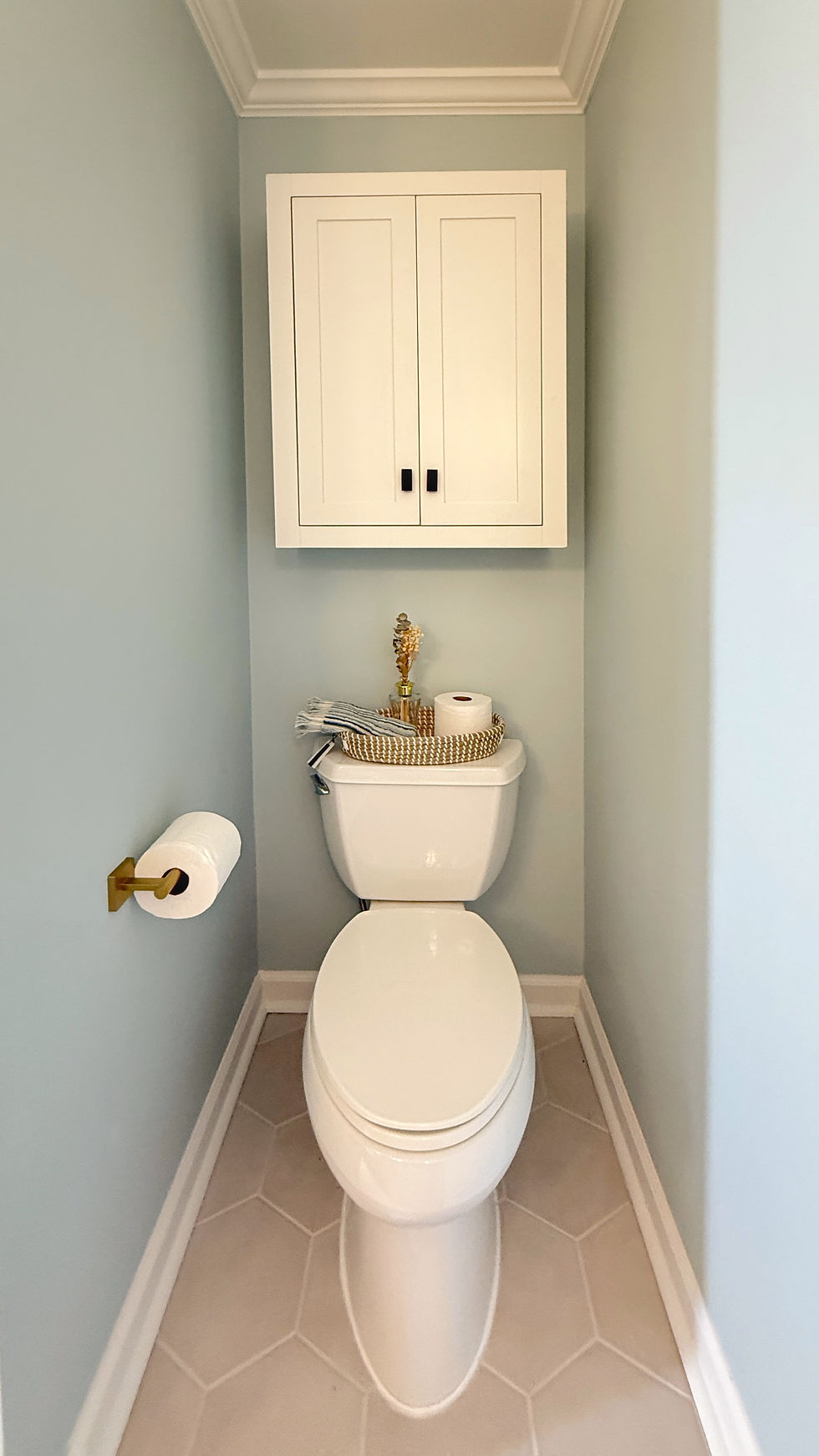
If storage is limited, even something as simple as a cabinet above the toilet can make a huge difference. Cabinets with closed doors and a drawer can provide easy storage for extra toilet paper, cleaning supplies, towels, or personal items while helping the bathroom stay cleaner and less visually cluttered day to day.
And while storage may not be the most exciting part of a remodel, it’s often one of the things homeowners appreciate most once everyday life settles back in.
Bathroom remodels involve far more moving parts than most homeowners expect, but thoughtful planning from the beginning can help create a space that not only looks beautiful, but functions well for years to come. Remodels also rarely unfold perfectly from beginning to end. Delays happen, materials arrive damaged, unexpected issues get uncovered, and adjustments sometimes have to be made along the way. That’s simply part of the remodeling process. What matters most is keeping the overall vision in mind and understanding that the temporary inconveniences are usually worth the final result.
The best bathrooms are rarely the trendiest ones. They’re the ones designed around the way people actually live — balancing beauty, practicality, maintenance, and budget in a way that feels timeless instead of temporary. And while paint often feels like the first decision to make, I’ve found it’s usually one of the last. Once the permanent finishes are selected, the right paint color becomes much easier to identify.
Sometimes the best place to begin isn’t with paint at all, but with something inspiring — a favorite rug, piece of artwork, wallpaper, or fabric that helps guide the direction of the space and keeps all the selections feeling connected.
And if you find yourself overwhelmed somewhere between grout samples, lighting temperatures, and faucet finishes… trust me, you’re not alone. If you need help pulling all the moving pieces together, Bee Cee & Company offers both local and virtual design consultations to help homeowners create bathrooms that feel cohesive, functional, and thoughtfully designed from the start.


Comments